Frequently Asked Questions for pySolo.
Pisolo (pronounced /pi:solo/ ) is the italian word for nap. The Py stands for Python, of course.
Microsoft Windows 2000, Windows XP, Windows Vista, any Linux (32-bit, 64-bit), Mac OS X, Solaris. In theory, all platforms that can run Python 2.5.
pySolo will run without problems on any machine with a processor of at least 1Ghz and 1Gb of RAM. Data files are automatically compressed so that they normally take less than 1mb per experiment so disk space is not an issue either.
Yes you can, if you are running a Microsoft Windows OS. Just download the binary version from the download page. In the near future it should also be possible to download a binary version for MacOS.
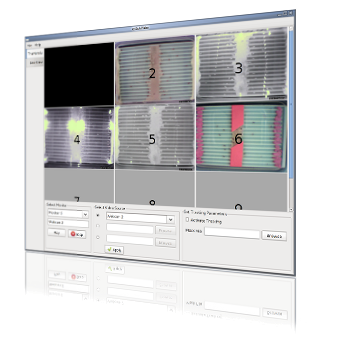
Yes you can, provided that you have a sleep definition for your animal of choice. pySolo will analyze locomotor activity data of whatever organism. All you need to do is to find a way to measure activity of your favorite animal model and to correlate that to sleep and ready you are. The standard installation of pySolo will work out of the box with data obtained from the TriKinetics machines or with data collected through our webcam-based system (see an example here). Yet the system is very versitile and it should be very easy to integrate a new kind of acquisition module.
These are my personal picks: if you use windows, I find pyScripter to be the best. On Linux and MacOS, eclipse+pyDev work very well. Here you will find video instruction on how to install eclipse and pyDev on MacOSx. These are all free editors.
If you take it seriously and have already at least a modest programming background, you should be able to get very familiar with python in a few days; at least familiar enough to be able to write a new plug-in for scratch. Modifying an existing plug-in may take even less.
This is my personal suggestion on how to proceed: first try to get some familiarity with Python tout-court. There is plenty of free tutorials on the web or you can grab an introductive book. Then move to numpy/scipy documentation, to know how to handle numerical matrices. Then, look into matplotlib documentation. Knowledge of wxPython (the thing drawing the actual GUI) is not really necessary. If you don't have much experience with programming at all you may find it tough in the beginning but remember that python is actually an extremely powerful language and a good knowledge of it will help you a long run in your scientific career. Also, python is actually a very easy-to-learn programming language and learning curve may appear steep in the beginning but really things will be getting easier pretty soon.
Finally, remember python's Motto: "Use the source, Luke!". Start modifying some of the panels (they are all thouroughly commented) or tweaking existing code.
Unfortunately I don't have access to an apple computer at the moment so it is difficult for me to compile a mac version. pySolo has been tested on macs in its Python version and it works just fine. If you are willing to help compiling a mac version (or are rich enough to donate a mac) please drop me an email.
If there is a feature you would love to be included in the next release of the software, you are welcome to add it to the wishlist. For reporting bugs probably at this stage you'd better start simply dropping me an email (my address is in the Contacts page).
